- The legal-AI market split between transactional and litigation tooling is structural, not cultural. Bar opinions, court standing orders, and the sanctions docket attach to filings before a tribunal. Contract formation operates outside that perimeter. Read §01
- The Federal Arbitration Act section 10 vacatur shield is the keystone. Even adverse AI-related arbitral findings are nearly impossible to set aside on AI grounds, especially after Hall Street v. Mattel. Read §03
- The contract itself is the operative regulatory instrument. Arbitration, choice of law, integration, AI-use acknowledgments, limited discovery, and liquidated damages stacked together route disputes away from the court system at formation. Read §04
- The unauthorized-practice analysis is narrower for contract formation than for court representation. Entities can use AI to draft their own contracts at any scale without UPL exposure. Rowland v. California Men's Colony addresses court appearance, not contract drafting. Read §06
- The non-waivable floor remains: unconscionability, public policy, federal civil rights, state consumer protection, certain employment claims, bar ethics duties on the lawyer side. The architecture works for sophisticated commercial parties on most subject matters. Read §07
Contract AI and the arbitration shield.
Transactional AI has moved at a different speed than litigation AI for three years. The reason is structural, not cultural. The court rules and bar opinions that govern AI in litigation stop at the courthouse door, and the Federal Arbitration Act forecloses most of the path courts would otherwise have to reach contract-side AI use. A market-structure reading of why $3B+ in legal AI investment landed on the transactional side, and where the architecture finally hits its limits.
The category asymmetry. #
In May 2026, the legal-AI vendor field tells a clear story without any commentary attached. The companies that have drawn the largest rounds sit on the transactional side. Spellbook inside Microsoft Word. Ironclad. Robin AI. Crosby. Evisort before its Workday acquisition. Kira before Litera. Luminance. Definely. Henchman. DraftWise. Pincites. BlackBoiler. Each of these targets contract drafting, contract review, or contract lifecycle management.
The litigation side has its own market, but the size and pace are different. Lex Machina, Trellis, Pre/Dicta, Premonition, the citation-grounded research tools (Westlaw Precision, Lexis+ AI, Vincent, Midpage, CoCounsel), and the brief-assistance tools (Briefpoint, BriefCatch, WordRake). Real products, smaller rounds, slower adoption curves, more cautious customer behavior.
Three years of this asymmetry suggests something structural is in play rather than a temporary market lag. The structural explanation runs through the law governing AI use. The bar opinions, the court standing orders, the sanctions docket, the verification duty under Rule 11, the documented hallucination database (1,436 cases globally as of mid-May 2026), and the threat of state-bar discipline all attach to the same thing: filings before a tribunal and conduct by counsel in a representational capacity.
Contract formation operates on the other side of that perimeter. A contract drafted by AI, signed between two parties, sitting in performance, never crosses any of the threshold conditions that activate the governance architecture. The court has no occasion to read it. The bar has no occasion to discipline anyone. The Rule 11 verification duty does not attach to a document that has never been filed.
That regulatory absence has a market effect. Capital and talent flow toward problems where the operational ceiling is feature quality, not compliance friction. Contract-AI procurement decisions turn on workflow integration, accuracy, and price. Litigation-AI procurement decisions turn on the same things plus a layer of regulatory diligence (citation grounding, audit logs, no-training commitments, sub-processor disclosure) that adds cost without adding feature value to the buyer. The friction is real, and it has shaped what the market built.
The cage stops at the courthouse door. #
The full architecture of the litigation cage runs through standing orders, ABA Formal Opinion 512, state bar opinions, and the sanctions docket. The detail is in Mata, three years on and in the ABA Op. 512 implementation playbook. The short version for present purposes:
By April 2026, at least 30 federal district courts have adopted some form of AI disclosure requirement, either as standing orders by individual judges or as district-level local rules. The pattern is consistent across them: identify whether AI was used, name the tool, and certify that a licensed attorney has independently verified all citations and factual assertions. Sanctions for noncompliance have ranged from a few thousand dollars to over $100,000 in a single matter.
ABA Formal Opinion 512 (July 29, 2024) maps the lawyer's duties to six Model Rules: competence (1.1), confidentiality (1.6), communication (1.4), candor to the tribunal (3.1, 3.3), supervision (5.1, 5.3), and reasonable fees (1.5). The opinion is structured around lawyer conduct in matter handling, with particular attention to filings and tribunal appearances.
State bar opinions have followed the same pattern with local detail. California's Practical Guidance, Florida's Opinion 24-1, New York State Bar's task-force report, the District of Columbia's Opinion 388, North Carolina FEO 2024-1, and analogous opinions in Texas, Illinois, Massachusetts, and elsewhere all repeat the structure: lawyer duties, filing-side obligations, client-confidentiality posture for representational work.
What none of these reach: a contract drafted by AI between two sophisticated business parties, executed under their own signatures, and performed without controversy. The lawyer's bar duties attach to lawyer conduct. The court's standing orders attach to filings. The sanctions docket attaches to representations made to tribunals. A contract that lives outside the litigation cycle never trips any of those wires.
The Rule 3.3 duty of candor to the tribunal is instructive on the point. It is one of the six pillars of ABA Op. 512. It applies only when there is a tribunal. A lawyer using AI to draft an NDA between two private parties has no Rule 3.3 obligation because there is no tribunal. The verification rigor required of a brief, which has produced most of the sanctions docket, has no transactional analog.
The Federal Arbitration Act section 10 vacatur shield. #
The contract-side AI environment depends on the parties' ability to keep disputes out of the court system. The structural reason that ability holds is the Federal Arbitration Act, codified at 9 U.S.C. section 10. Section 10 provides four exclusive grounds for setting aside an arbitral award in federal court:
- The award was procured by corruption, fraud, or undue means.
- There was evident partiality or corruption in the arbitrators.
- The arbitrators were guilty of misconduct in refusing to postpone the hearing on sufficient cause, refusing to hear pertinent and material evidence, or any other misbehavior that prejudiced the rights of a party.
- The arbitrators exceeded their powers, or so imperfectly executed them that a mutual, final, and definite award upon the subject matter submitted was not made.
That is the entire list. There is no fifth ground for legal error. There is no ground for factual misjudgment short of corruption. There is no ground for the arbitrator's use of an AI tool whose privacy policy permits training, no ground for an arbitrator's reliance on AI-generated reasoning, no ground for an attorney's use of consumer-tier AI in preparing the case.
The Supreme Court's decision in Hall Street Associates v. Mattel, 552 U.S. 576 (2008) held that the section 10 grounds are exclusive. Parties cannot contractually expand the grounds for vacatur. The longstanding manifest-disregard-of-the-law doctrine, which had survived in some circuits as either a section 10(a)(4) implementation or as a non-statutory addition, has been substantially narrowed or eliminated in most circuits after Hall Street.
The combination produces a structural effect. An arbitral award rendered in a proceeding where AI was used heavily, in violation of one of the institutional AI guidelines that arbitration providers have begun publishing (see §05), is nearly impossible to set aside on AI-related grounds. The loser would need to characterize the AI use as fraud, partiality, misconduct under section 10(a)(3), or excess of authority. None of those characterizations fit the typical AI-use pattern. The award stands.
This is the keystone of the contract-side AI architecture. The parties drafting the contract can build in a binding arbitration clause, route every dispute into private arbitration, and rely on the FAA to keep the resulting award from being unwound on AI-related grounds. The institutional AI guidance that JAMS, AAA, SVAMC, and others have shipped operates in this environment as guidance, not as enforcement-level rules, because the FAA forecloses the path the court would otherwise take to enforce them.
The qualifications are real. Awards procured by corruption or fraud are vacatable, and an arbitrator who relied entirely on a hallucinated AI authority could conceivably trigger section 10(a)(3) misconduct. But the doctrinal lift to get there is substantial, and the typical case where a party would invoke it is the typical case in which a federal court would prefer not to. Federal arbitration policy favors enforcement of awards. The vacatur threshold is high by design.
The contract architecture toolkit. #
Sophisticated parties do not stop at including an arbitration clause. They build the dispute architecture into the contract itself, layering provisions that compound to route most AI-related disputes away from a court. The toolkit, drawn from current practice:
- Binding arbitration with chosen institution. Specifying JAMS, AAA, SVAMC, or another institution allows parties to opt into a rule set that already addresses AI use, and to do so on terms more permissive than typical court-side standing orders. The institution provides a default forum and a procedural framework.
- Mediation-first clauses. Requiring mediation before arbitration adds a further off-ramp from the court system. The mediation outcome, if successful, is a settlement agreement, which is itself a contract.
- Choice of law and forum. Parties can select governing law (often Delaware for sophistication, sometimes New York for substantive depth) and arbitration seat. Both choices affect which procedural rules apply and which courts have collateral jurisdiction.
- Integration and merger clauses. Establishing that the written contract is the entire agreement forecloses arguments that the parties intended something else, including arguments about how the AI-generated language was understood at signing.
- AI-use acknowledgment. Express acknowledgment by both parties that AI tools were used in drafting eliminates the surprise and misrepresentation angles of any later challenge. If both sides acknowledge AI involvement, neither can plausibly claim ignorance.
- Confidentiality provisions. Keeping disputes out of public view limits the discovery surface on which AI-provenance questions could be developed in a subsequent proceeding.
- Limited discovery clauses. Narrowing the scope of permissible discovery reduces the opportunity to develop AI-use evidence. Arbitration discovery is already thinner than federal civil discovery; contract clauses can narrow it further.
- Jury trial waivers. A judge applying contract doctrine produces a more predictable outcome on AI questions than a jury responding to AI-as-novelty arguments.
- Liquidated damages. Setting the damages exposure in advance forecloses court re-examination of the substance of the bargain.
- Appeal limitation clauses. Beyond the FAA default, parties can narrow vacatur and appeal grounds further (within constitutional limits).
Each of these provisions is enforceable between sophisticated commercial parties on most subject matters. Stacked, they form a structural moat. The contract architecture does not eliminate the possibility of AI-related disputes; it shapes where those disputes are resolved and on what terms. For firm-level operational implementation, see the arbitration practice playbook.
The arbitration regimes that already shipped. #
The institutional arbitration providers have not been passive. By May 2026, the most-used institutions have published AI guidance, though the guidance is softer than typical court-side standing orders. The detail for each institution is in the companion piece on AI in US arbitration; the structural overview for present purposes:
JAMS published the Artificial Intelligence Disputes Clause and Rules effective June 14, 2024, along with an AI Disputes Protective Order that applies by default in AI-related matters. Their primary scope is disputes about AI (where the AI is the subject of the litigation), not the use of AI by counsel or arbitrators in conducting other arbitrations. JAMS has separate, softer guidance for the latter.
AAA has published Principles Supporting the Use of AI in Alternative Dispute Resolution. The principles require independent human judgment, verification of outputs against trusted sources, and disclosure of AI tool use to the parties. AAA-ICDR launched an AI Arbitrator for documents-only construction cases in September 2025, expanded availability in early 2026, and in March 2026 added a Resolution Simulator for nonbinding pre-arbitration outcome assessment.
Silicon Valley Arbitration & Mediation Center (SVAMC) published Guidelines on the Use of AI in International Arbitration on April 30, 2024. Seven guidelines cover competence, confidentiality, and disclosure. After a comment-period reaction to a mandatory-disclosure proposal, the final guidelines made disclosure decisions case-by-case rather than generally obligatory.
International institutions (ICC, SIAC, HKIAC, LCIA) have working groups and varying degrees of issued guidance. Coverage is uneven.
What none of these institutions have produced is a sanctions-grade enforcement regime comparable to a federal court standing order. The institutional guidance operates by professional norm and arbitrator discretion. A party who violates JAMS guidance in a proceeding does not face the equivalent of a Rule 11 sanction; the consequence runs through the arbitrator's discretion and the eventual award. Combined with the FAA section 10 vacatur shield, that produces a regulatory environment in which AI guidance exists but does not have the teeth of court-side enforcement.
A separate caution applies to court-ordered ADR. Mediation ordered by a court, settlement conferences before a magistrate judge, and court-annexed arbitration programs carry the supervising court's AI rules with them. Court-ordered ADR is inside the litigation cage, not outside it. The contract-architecture toolkit works for private arbitration agreed in advance, not for court-supervised proceedings.
The UPL gap for entities and individuals. #
A second structural difference between the litigation environment and the contract environment runs through unauthorized practice of law (UPL) rules. UPL exists in every state and reaches conduct that would otherwise constitute the practice of law by an unlicensed person. The conduct it reaches is narrower than non-lawyers often assume.
For individuals, the rule is straightforward. A natural person representing themselves can engage in any legal task on their own behalf without UPL exposure. That includes drafting any contract, with or without AI assistance. Pro se conduct in contract drafting is unconstrained. The reference here is the long-standing rule that an individual handles their own legal affairs; the AI tool used in that handling does not change the analysis.
For entities (corporations, LLCs, partnerships), the rule is more nuanced. The Supreme Court held in Rowland v. California Men's Colony, 506 U.S. 194 (1993) that artificial persons cannot proceed pro se in federal court, and parallel state authority establishes the same rule for nearly all state courts. Entities must retain licensed counsel to appear before a tribunal.
That rule, however, is about court appearance, not about contract formation. An entity drafting its own contracts is conducting business, not practicing law. A corporation can have a paralegal draft an NDA, a business-development employee negotiate an MSA, an AI tool generate a vendor agreement, and an officer sign it, all without UPL exposure. The practice-of-law line is crossed by drafting for a third party, providing legal advice to a third party, or holding oneself out as a lawyer. None of those applies to an entity handling its own contracts.
The gray zones are real and worth flagging. In-house counsel must be licensed somewhere. Most states have streamlined registered-in-house-counsel paths that allow in-house lawyers to practice on behalf of the employing entity even in jurisdictions where they are not bar-admitted. Drafting for affiliates or subsidiaries is sometimes treated as third-party drafting in strict UPL jurisdictions (Texas, Florida); permissive jurisdictions treat the corporate group as a single client. Document-automation businesses serving consumers (LegalZoom, Rocket Lawyer) have litigated UPL challenges over the years and substantially resolved them through disclaimers and form-only positioning. AI contract platforms serving paying non-lawyer customers is an emerging UPL frontier, particularly after Federal Trade Commission enforcement actions in 2023-2025 against certain consumer-AI platforms.
For purposes of contract-side AI in the commercial context, the unauthorized-practice analysis is permissive. Entities can use AI to draft their own contracts at any scale. The bar reaches only the lawyer who chooses to participate; if no lawyer is involved on the drafting side, the bar has no reach.
The non-waivable floor. #
The contract architecture above has limits. The architecture is most powerful for commercial contracts between sophisticated parties on most subject matters. It stretches thinner at the consumer and employment edges and breaks at certain non-waivable provisions.
Unconscionability. A contract that is too one-sided in formation or substance can be set aside as unconscionable. Procedural unconscionability addresses the manner of contracting (the surprise and oppression dimensions). Substantive unconscionability addresses the terms themselves. Arbitration clauses are themselves subject to unconscionability analysis, and the post-Concepcion (2011) line has shifted but not erased the doctrine.
Public policy. Courts will refuse to enforce contracts that violate strong public policy. This is judge-made and unpredictable. AI-drafted contracts that arrange around statutory protections are particularly exposed at this layer.
Federal civil rights. Title VII, the Americans with Disabilities Act, 42 U.S.C. section 1983, and analogous federal civil-rights protections are accessible despite arbitration clauses, with FAA carve-outs and the operating doctrine that civil-rights claims can be arbitrated but not waived.
State consumer-protection acts. Most state consumer-protection statutes have non-waiver provisions for consumer contracts. California, New York, and Massachusetts are particularly active in this area.
Wage, hour, and certain whistleblower claims. The Ending Forced Arbitration of Sexual Assault and Sexual Harassment Act of 2021, enacted in 2022, removed pre-dispute arbitration from sexual-harassment and sexual-assault claims. Other employment-claim carve-outs from FAA enforcement exist.
Bar ethics duties. These bind the lawyer, not the parties. A lawyer cannot contract their way out of Rule 1.6 or competence duties. Where a lawyer participates in contract drafting, the lawyer's ethical obligations apply regardless of what the contract says.
Tribunal procedural rules. Once a dispute is before a court or a regulator, that body's rules apply. The contract can route around getting there; it cannot override the rules that apply once the matter is being heard.
Emerging state AI-disclosure statutes. A small number of states are drafting consumer-AI-disclosure laws that target consumer-facing transactions. These would not be waivable through commercial contract terms.
These non-waivable items are real. They are also narrower than the contractable areas, especially for commercial transactions between sophisticated counterparties on most subject matters. The architecture works for the broad commercial market. It does not work for consumer contracts, employment, civil-rights matters, or regulated industries where statutory floors override contractual choices.
What this means for the legal-AI market. #
The structural picture explains four observations that would otherwise be puzzling.
Why transactional AI got rich first. Spellbook, Ironclad, Evisort, Kira, Luminance, Robin AI, DraftWise, Crosby, and the rest occupy the regulatory dead zone. The buyer's procurement decision turns on workflow integration, accuracy, and price, not on regulatory diligence. The market expanded fast because the friction was structural rather than compliance-imposed.
Why litigation AI had to engineer differently. Westlaw Precision, Lexis+ AI, CoCounsel, Vincent, Midpage, Harvey for litigation use, and the brief-assistance tools all built around citation grounding, audit trails, no-training commitments, and hallucination-resistance. That architecture is expensive to build and reduces the marketable feature set per dollar of engineering investment. The result is a slower-growing market with smaller rounds. For the procurement detail, see the vendor comparison and the vendor diligence catalogue.
Why AI-native law firms chose transactional first. Crosby's NDA-and-MSA practice, Soxton's startup-contract focus, Landfall's USPTO patent prosecution, Moritz's transactional book, Lawhive's consumer-transactional matters via its Arizona ABS structure. Each chose a transactional foothold for the same structural reason. The litigation arm of an AI-native firm faces the full court-side cage immediately. The transactional arm operates in the regulatory environment this piece has described.
Why bridge tools are the most-watched product category. Anthropic's Claude for Legal, released May 12, 2026, with practice-area plugins covering both transactional and litigation work, deployed at Freshfields, Quinn Emanuel, Holland & Knight, and Crosby. If a single platform can carry the regulatory architecture for the litigation side while preserving the procurement velocity of the transactional side, that platform captures the next two years of legal AI revenue. The bridge category is not just a product positioning. It is the category that resolves the structural asymmetry.
The reckoning. #
The asymmetry is not permanent. Four forces are visible at the May 2026 horizon, any of which could compress the dead zone over the next 18 to 36 months.
State consumer-AI-disclosure statutes. A small but growing number of states have draft legislation that would impose AI-disclosure requirements on consumer-facing legal services. These statutes target the lawyer-light corner of the market first. They reach AI-native law firms and document-automation businesses directly.
Outside Counsel Guideline hardening. Corporate clients with sophisticated legal-procurement functions have been restricting transactional AI use faster than bar regulators. Fortune 500 OCGs in early 2026 increasingly prohibit AI in M&A or board-facing matters. This is client-side gating, not bar oversight, but it produces a similar effective restriction on what large-firm transactional practices can do with AI.
Litigation of AI-drafted contracts. Contracts being AI-drafted in 2024-2026 will start being litigated in 2028-2030. When they are, courts will get their first real look at what AI actually produced. The court-side regulatory architecture will reach backward through evidentiary admissibility challenges, contract-formation defenses (mutual mistake, unilateral mistake, failure of consideration), and possibly fraud-in-the-inducement claims. The dead zone shrinks retroactively at that point.
Doctrinal leakage from privilege rulings. United States v. Heppner (S.D.N.Y. Feb. 17, 2026), decided by Judge Rakoff, held that consumer-tier AI use can waive attorney-client privilege based on the AI vendor's terms of service. The reasoning, that terms expressly permitting training and disclosure defeat the reasonable expectation of confidentiality, is portable into contract-formation challenges. A party who used consumer-tier AI to draft a contract containing counterparty-confidential information may have created a separate privacy or confidentiality cause of action. The doctrinal lines drawn in litigation will start cutting across the contract space.
Until then, the dead zone is real. The Federal Arbitration Act vacatur shield holds. The contract-architecture toolkit works. The legal-AI vendors that bet on contracts being structurally different from litigation have been right for three years and counting.
The only constraint, as always, is what counsel can write into the four corners of the document. For practitioners doing transactional work in 2026, that means writing carefully and, increasingly, using the enterprise-tier tools whose terms support the necessary-agent posture Heppner left open for future privileged-material AI use. The structural advantage exists. It is operational by the time it shows up in a contract.
Frequently asked questions.
Why has contract-side AI grown faster than litigation-side AI?
The legal-AI governance architecture (court standing orders, ABA Formal Opinion 512, state bar opinions, the sanctions docket) attaches to filings before a tribunal and to lawyer conduct in representational matters. Contract formation operates outside that perimeter. The Rule 11 verification duty does not attach to documents that never reach a court. The Rule 3.3 candor duty applies only when there is a tribunal. Capital and talent have flowed toward the regulatory environment with the lower compliance friction.
What is the Federal Arbitration Act section 10 vacatur shield?
9 U.S.C. section 10 provides four exclusive grounds for vacating an arbitral award in federal court: corruption/fraud/undue means, evident partiality, arbitrator misconduct, or excess of powers. The Supreme Court held in Hall Street Associates v. Mattel that these grounds are exclusive, and the manifest-disregard-of-the-law doctrine that might have reached AI hallucination has been substantially narrowed or eliminated in most circuits after Hall Street. An arbitral award rendered with heavy AI use that violates institutional AI guidance is nearly impossible to set aside on AI-related grounds.
Have JAMS and AAA issued AI guidance?
Yes. JAMS published the Artificial Intelligence Disputes Clause and Rules effective June 14, 2024, with an AI Disputes Protective Order. AAA published Principles Supporting the Use of AI in ADR, launched an AI Arbitrator for documents-only construction matters in September 2025, and added a Resolution Simulator in March 2026. SVAMC published Guidelines on the Use of AI in International Arbitration on April 30, 2024. The institutional guidance is softer than typical court standing orders, and combined with the FAA vacatur shield, operates by professional norm and arbitrator discretion rather than by sanctions-grade enforcement.
Can a corporation draft contracts with AI without unauthorized practice issues?
Yes, for contracts the entity is drafting on its own behalf. The Supreme Court's rule in Rowland v. California Men's Colony that artificial persons cannot proceed pro se in federal court addresses court appearance, not contract formation. Entity contract drafting is doing business, not practicing law. A corporation, LLC, or partnership can have a paralegal, business-development employee, AI tool, or any combination produce contracts that the entity executes through any authorized officer, without unauthorized-practice exposure. The UPL line is crossed only by drafting for a third party, providing legal advice to a third party, or holding oneself out as a lawyer.
What can a contract architecture not waive?
Unconscionability, public-policy floors, federal civil-rights claims, state consumer-protection acts (most have non-waiver clauses for consumer contracts), wage/hour and certain whistleblower claims, bar ethics duties (which bind the lawyer not the parties), and tribunal procedural rules once a matter is being heard. The Ending Forced Arbitration of Sexual Assault and Sexual Harassment Act of 2021 removed pre-dispute arbitration from sexual-harassment and sexual-assault claims. The architecture works most strongly for commercial contracts between sophisticated parties on most subject matters and stretches thinner at consumer and employment edges.
Will this regulatory asymmetry persist?
Probably not indefinitely. Four forces are visible at the May 2026 horizon. First, state consumer-AI-disclosure statutes are in draft in a small but growing number of jurisdictions. Second, corporate Outside Counsel Guidelines are restricting transactional AI faster than bar regulators. Third, AI-drafted contracts being signed in 2024-2026 will start being litigated in 2028-2030, at which point courts will get retrospective access to what AI actually produced. Fourth, the privilege ruling in United States v. Heppner provides terms-of-service-based reasoning that could be portable into contract-formation challenges. The dead zone is real today and probably narrower in 36 months.
About the author.
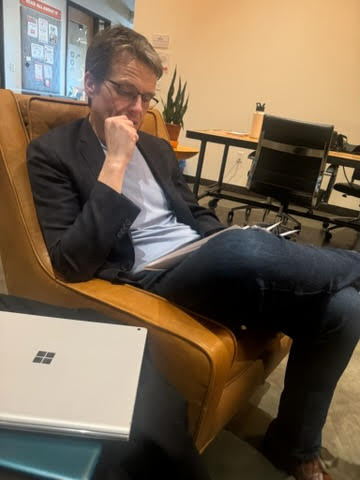
Dan Hughes is the founder of IXSOR. Twenty years in the UK, twenty-five in North Carolina. Ex-BBC. Ex-Apple. Lifelong technologist. And, most importantly: not an attorney. He writes about legal AI from the operational and infrastructure side, where the rules meet the machines. Reach: [email protected]. More by Dan →
General analysis. Not legal advice.
This piece is general analysis of the structural regulatory environment for AI in commercial contracting in the United States. It is not legal advice on any specific contract, dispute, or jurisdiction, and it does not create a lawyer-client relationship. Practitioners reviewing actual transactions should consult licensed counsel admitted in the relevant jurisdictions.