AI in US Arbitration.
The same AI questions courts have been wrestling with have arrived in arbitration, on a different power structure underneath them. Arbitrators have no Article III inherent contempt authority, no Rule 11 equivalent, no native subpoena enforcement. The same fact patterns courts solve via judicial sanctions, arbitrators must solve through provider rule design and pre-hearing procedural orders. Two divergent provider tracks. The first reported §10(a)(4) AI-vacatur attempt. The mediation-confidentiality wrinkle nobody has solved yet.
- Arbitrators do not have inherent contempt authority. The toolkit a federal judge uses to police AI hallucinations — Rule 11, inherent power, bar referrals, evidentiary sanctions — is not what an arbitrator has. The arbitrator's authority is contractual, drawn from the rules the parties accepted and the orders the arbitrator has already issued. Read §02
- The single highest-leverage move is asking for an AI procedural order. AAA Rule 61 and JAMS Rule 29 do not name AI. Without an AI-specific procedural order at the preliminary conference, hallucinated citations are an "ethical concern" with weak teeth. With one, they are violation of an arbitrator order and Rule 61 / 29 sanctions become real and immediate. Read §02
- Two divergent institutional tracks. JAMS wrote rules. AAA-ICDR built an AI arbitrator. CIArb published guidelines. The College of Commercial Arbitrators issued personal-use guidance for arbitrators. FedArb framed the practitioner-side ethics. FINRA stayed deliberately technology-neutral. Each path solves a different piece. Read §03
- The first §10(a)(4) AI-arbitrator vacatur attempt was dismissed without reaching the merits. LaPaglia v. Valve Corporation, Dec. 9, 2025, dismissed for lack of jurisdiction. The "exceeded powers" theory under FAA §10(a)(4) for arbitrator AI use is live for the next petition. Read §05
- Mediation is the highest-confidentiality, lowest-disclosure setting in US dispute resolution. It is also the most exposed to AI privilege-waiver risk. A party uploading mediation material to a public AI tool likely waives privilege on the same logic as Heppner, and no reported decision has yet squarely addressed it. Expect one by 2027. Read §06
- State mandatory-mediation regimes have not yet caught up. AI-disclosure requirements are arriving for court filings (Miami-Dade, Palm Beach County, California Rule of Court 10.430). Mediation-specific AI disclosure does not yet exist at the state level in any major ADR jurisdiction. Read §07
- The AAA AI Arbitrator is a live product. November 2025 launch. Two-party, documents-only construction cases. Human-in-the-loop. Expansion to consumer and employment in 2026. The first §10(a)(4) challenge to an AI Arbitrator-issued award will arrive within 18 months. Read §04
The headline framing. #
Three federal AI cases reshaped how courts handle counsel and party AI use during 2024 and 2025. Mata v. Avianca established that fabricated AI citations support sanctions under Rule 11 and the court's inherent power. Park v. Kim and the post-Mata line confirmed that the duty to verify AI-cited authority is a baseline professional obligation. United States v. Heppner (S.D.N.Y. Feb. 2026) held that submitting confidential material to a public-version generative AI system is, on the privacy-policy face, a third-party disclosure that defeats privilege and (separately) work-product protection. Tremblay v. OpenAI and Warner v. Gilbarco Veeder-Root refined the edges. The judicial machinery responding to all of this — sanctions, fee shifts, bar referrals, evidentiary exclusions — is the same machinery that handles every other species of attorney misconduct.
Arbitration does not have that machinery. The same questions are arriving in arbitration anyway, and the structural fact — that arbitrators have substantially less authority than judges to manage AI misuse — drives everything else in this piece.
US arbitral providers have responded along two divergent tracks. JAMS wrote rules. AAA-ICDR built an AI arbitrator. CIArb published guidelines. The College of Commercial Arbitrators issued personal-use guidance for arbitrators. FedArb framed practitioner ethics. FINRA stayed technology-neutral. The first reported vacatur petition alleging arbitrator AI use, LaPaglia v. Valve, was dismissed in December 2025 for lack of jurisdiction without reaching the merits. The §10(a)(4) "exceeded powers" theory is live for the next petitioner.
For practitioners: the most consequential single move you can make right now is asking for an AI-specific procedural order at the preliminary conference. Without it, the arbitrator's tools for managing AI misuse are weaker than a federal judge's by an order of magnitude. With it, AAA Rule 61 and JAMS Rule 29 sanctions become real.
The structural difference: courts vs arbitral fora. #
Courts and arbitrators are converging on the same set of AI questions but operating in different terrain. The terrain matters because it determines what tools the adjudicator has when the questions go wrong.
In court, the response toolkit is settled. Federal judges have inherent contempt authority under Chambers v. NASCO and Goodyear Tire v. Haeger, Rule 11 with all its teeth, the ability to refer counsel to bar discipline directly, native subpoena enforcement, and the full apparatus of evidentiary sanctions. The post-Mata line of cases shows that machinery operating against AI misuse with no friction.
Arbitrators have none of those things by default. Their authority is contractual, drawn from the rules the parties accepted and the orders the arbitrator has already issued. AAA Rule 61 and JAMS Rule 29 give arbitrators sanction power for non-compliance with rules or orders. Neither rule names AI specifically. The hallucinated-citation problem is not currently an enumerated violation. It becomes one only when the arbitrator issues a procedural order at the outset that turns it into one.
This is the practical point with the largest stakes: whether AI misuse is sanctionable in your arbitration depends almost entirely on whether someone asked for an AI-specific procedural order at the preliminary conference. If you don't propose it, it doesn't exist.
Below, a side-by-side. The asymmetry is not subtle:
- Inherent contempt authority. Federal court: yes. Arbitrator: no.
- Rule 11 equivalent. Federal court: yes (FRCP 11). Arbitrator: no — only contractual rules apply.
- Bar referral authority. Federal court: direct. Arbitrator: indirect — must report; the bar acts.
- Subpoena enforcement. Federal court: native (court order). Arbitrator: must seek court enforcement.
- Sanction authority generally. Federal court: broad and inherent. Arbitrator: limited to what the provider rules grant.
- Public record. Federal court: PACER by default. Arbitrator: confidential by default, which limits the deterrent value of any sanction even if imposed.
What arbitrators can do under existing rules: AAA Rule 61 and JAMS Rule 29 allow sanctions for non-compliance with rules or orders — assessment of fees, exclusion of evidence, drawing adverse inferences, dismissal in extreme cases. AAA's May 2025 Consumer & Employment Rules update went further and added explicit arbitrator authority to impose "appropriate sanctions" to enforce orders and rules. The path to AI-misuse sanctions runs through the procedural order: the order makes AI disclosure / verification mandatory; non-compliance with the order is a Rule 61 / 29 violation; sanction follows.
Track 1 — Rule-write providers. #
One strategy: codify AI handling in arbitration rules and guidelines, so that arbitrators and counsel have a published reference to anchor procedural orders against. JAMS led; CIArb followed; the College of Commercial Arbitrators issued arbitrator-facing personal-use guidance; FedArb published practitioner-side ethics; FINRA stayed deliberately technology-neutral.
JAMS — first to publish AI-tailored arbitration rules.
The JAMS Artificial Intelligence Disputes Clause and Rules, effective June 2024, became the world's first arbitration rules tailored to AI disputes. Three notes about scope:
- The JAMS AI Rules govern disputes about AI — training-data IP, algorithmic discrimination, AI privacy, AI product liability, AI vendor breaches. They are not rules about AI use by arbitrators or counsel.
- JAMS Rule 16(b) imposes broader confidentiality than the standard JAMS Comprehensive Rules — it extends the confidentiality obligation to all parties and counsel, not just JAMS and the arbitrator. Notable in the AI context because AI development frequently involves trade secrets and unreleased model details that no party would want exposed mid-arbitration.
- The AI Rules let parties bring in a "technically savvy" arbitrator or discovery referee for AI-specific e-discovery: model artifacts, training data manifests, weights, evaluations.
For non-AI disputes at JAMS, the standard Comprehensive Rules apply, and arbitrator authority over AI misuse runs through Rule 29 — which existed long before the AI era and still has teeth.
CIArb — international guidelines.
The Chartered Institute of Arbitrators published its Guideline on the Use of AI in Arbitration on March 13, 2025, updated September 2025. CIArb's audience is international and arbitrator-facing. Its core message is procedural: arbitrators should raise AI use early in the proceeding, ask counsel about counsel's AI use, consider appointing AI experts, and require AI disclosure. The guidance is consistent with what US bar guidance has been saying about court litigation, with one nuance: it more aggressively suggests arbitrators take a proactive role in policing party AI use, in part because the alternative regulatory machinery (bar discipline, court sanctions) is less accessible inside an arbitration.
College of Commercial Arbitrators — arbitrator personal use.
The CCA published practical guidance for arbitrators on their own AI use — "Should I Use Generative AI as an Arbitrator?" The CCA distinction is the key one: AI for drafting, summarization, or organization is acceptable; AI for evidence evaluation, witness credibility, application of law, or exercise of judgment is not delegable. Arbitrators should disclose their AI use, ask counsel about counsel's AI use, and memorialize all of it in a procedural order.
FedArb — practitioner-side ethics.
FedArb has been publishing practitioner-side ethics commentary focused on counsel's verification duty for AI work product cited in arbitration, mirroring the post-Mata litigation playbook. The verification rule is the same: every citation, every quote, every factual recitation read against the original source by a human attorney before submission.
FINRA — technology-neutral.
FINRA, governing the financial-dispute arbitration forum, has not published AI-specific arbitration rules. Its 2025 and 2026 Annual Regulatory Oversight Reports use generative AI as a continuing focus area but emphasize that FINRA's rules are "intended to be technology neutral" — existing rules apply to AI use the same as to any other technology. FINRA's de facto position: the disclosure obligations and supervisory rules already cover AI; no new rule is needed to enforce them.
Track 2 — AAA-ICDR builds an AI arbitrator. #
The other strategy: build AI tools that participate in the dispute resolution itself. AAA-ICDR is the only US institution that has shipped on this track.
The AAA-ICDR AI Arbitrator launched November 2025, currently scoped to two-party, documents-only construction cases. The model was trained on actual AAA-ICDR construction reasoning and calibrated against human arbitrator input. Crucially, the architecture is human-in-the-loop: a human arbitrator reviews the AI's reasoning before any decision is finalized. AAA's stated intention is to expand into consumer and employment law in 2026, with higher-value claims to follow.
This is the live experiment. Whether the AI Arbitrator survives the §10(a)(4) "exceeded powers" challenge that LaPaglia previewed — and whether parties accept it given its construction-only origin — will shape the next decade of dispute resolution far more than any rules document. The first reported §10(a)(4) challenge to an AI Arbitrator-issued award is likely to arrive within 18 months of any meaningful expansion.
Two adjacent AAA products fill out the picture:
- The AAA AI Chatbook, launched December 2025, is a guide for self-represented parties navigating AAA arbitration. Unlike the AI Arbitrator, this is an information product — it does not adjudicate.
- AAA's published AI Tools and Technology guidance for arbitrators and counsel continues to update; the operational frame mirrors the JAMS / CIArb procedural-order approach but with a heavier emphasis on disclosure, confidentiality, and party fairness.
The AAA Consumer Arbitration Rules and the AAA Mass Arbitration Rules also received material updates during 2024 and 2025. The May 2025 Consumer & Employment update specifically added explicit arbitrator authority to impose "appropriate sanctions" to enforce orders and rules — a direct response to the AI-hallucinated-citation problem the federal courts had been seeing in litigation.
The first §10(a)(4) AI-arbitrator vacatur attempt: LaPaglia v. Valve. #
This is the case that will be cited for the next decade.
Underlying arbitration. James LaPaglia, a Steam consumer and small developer, brought an AAA arbitration against Valve Corporation alleging anticompetitive practices and exclusion from Steam's marketplace. The case was consolidated and heard by a sole arbitrator. The arbitrator issued a 29-page final award for Valve 15 days after final briefing, during the December 23, 2024 to January 7, 2025 holiday period. That turnaround was unusually fast for the volume of material at issue.
The vacatur petition. LaPaglia filed in the Southern District of California seeking to vacate under FAA §10(a)(4) — the "exceeded powers" ground. The argument was novel: the arbitrator allegedly "outsourced his adjudicative role to artificial intelligence," and that delegation, rather than any specific reasoning error, was the §10(a)(4) violation. Three indicators alleged in the petition:
- The arbitrator had previously discussed using ChatGPT to draft articles in non-arbitration contexts.
- The award contained at least one factual error of the kind characteristic of AI hallucination — described Roblox as a "horror" game when it is a children's title with no horror elements.
- The 15-day turnaround between final briefing and a 29-page award during a holiday period.
Outcome. On December 9, 2025, the SDCA court granted Valve's motion to dismiss the first amended petition for lack of jurisdiction. The court did not reach whether arbitrator AI use can ground vacatur under §10(a)(4). The dismissal was procedural, not substantive.
What it sets up. Three live points for the next petition:
- The §10(a)(4) "exceeded powers" theory remains untested on the merits and viable. Whether LaPaglia would have succeeded on a developed factual record is unknown.
- Proving arbitrator AI use is hard. Arbitral records are thin by design — limited discovery, no public docket, no hearing transcripts as a default. Creating the evidentiary record to support a §10(a)(4) petition typically requires deposing the arbitrator post-award, which raises its own collateral issues.
- The remedy, if available, is total. Vacatur under §10(a)(4) erases the award. Asymmetric stakes — hard to win, but if you win, you win everything.
A serious post-LaPaglia §10(a)(4) petition will likely require: (a) factual evidence of AI use beyond inference (admission, metadata, third-party witness); (b) a pre-arbitration procedural order forbidding undisclosed AI use, so the violation is not merely "bad practice" but breach of an existing order; and (c) a record of factual or doctrinal errors of the kind AI is uniquely prone to (synthetic citations, plausible-sounding but incorrect factual recitations, non-sequitur reasoning). The state of the art on (a) is changing fast; expect to see this argument tried again before 2027.
The mediation-confidentiality wrinkle — where AI risk is highest. #
Mediation has stronger confidentiality protections than arbitration in most US jurisdictions. California Evidence Code §§1115 to 1129 is the apex example — a famously broad mediation privilege. Florida §44.102, Texas Civil Practice & Remedies Code §§154.052 to .073, and New York CPLR §§4547 / 7508 all protect mediation communications more aggressively than they protect any other adjudicative communications.
That stronger protection creates a paradox: mediation is the dispute-resolution stage where AI carelessness is most likely to silently waive privilege.
The mechanism is the Heppner mechanism, applied to mediation positions. A party's counsel, or the party themselves, uploads the confidential mediation brief, settlement position, candor-protected communication, or party-affidavit draft into a public-version generative AI tool — to summarize, to revise, to make it sharper. On the privacy-policy face of the major public AI tools, that submission is a third-party disclosure to the AI provider and (depending on the tool's terms) to the AI provider's downstream training pipeline and contractors. The mediation-privilege analysis maps onto the privilege analysis of Heppner: the disclosure to a third party operating under a permissive privacy policy that allows further disclosure breaks the confidentiality element of the mediation privilege.
States with broad mediation privilege have not yet directly addressed this. The construction-bar commentariat began calling it a developing problem in early 2026. The first reported decision squarely on point is likely to arrive in 2026 or 2027. When it does, expect it to be cited far more than LaPaglia, because the underlying fact pattern (a party or counsel uploading mediation material to ChatGPT) is dramatically more common than the fact pattern of an arbitrator using AI to draft an award.
The defensive move is the Heppner defensive move: closed-loop AI products only, with terms that prohibit third-party disclosure and training use. Mediation parties using public AI tools to revise their submissions are creating an extrinsic-evidence record that survives mediation confidentiality and may be discoverable in any subsequent litigation.
State-mandated mediation: the AI overlay. #
Federal courts must offer at least one ADR option per the Alternative Dispute Resolution Act of 1998. Implementation varies district by district. California's Central District requires participation in one of three ADR procedures unless the trial judge exempts. The ADR-mandate landscape is a patchwork the AI overlay has not yet caught up to.
Florida. Florida Bar Ethics Opinion 24-1 (January 2024) is the formal AI guidance. At the county level, Miami-Dade and Palm Beach County now require attorneys and self-represented litigants to disclose generative AI use in court filings — but these orders address court filings, not mediation submissions specifically. The mediation-AI gap remains open.
California. The State Bar's Committee on Professional Responsibility and Conduct (COPRAC) approved proposed Rules of Professional Conduct amendments addressing AI on March 13, 2026, currently in 45-day comment period. The proposed rules don't impose blanket disclosure — the trigger is "significant risk" or "material" effect on representation. Routine use generally won't require affirmative disclosure. California Rule of Court 10.430 separately requires courts to either ban AI use by judicial officers or adopt a formal AI policy with verification and disclosure.
Texas. Has a dedicated state-bar ADR section with comprehensive ADR statutes; no specific state-level mandatory-mediation + AI rule has surfaced.
The pattern across states: AI-disclosure mandates are arriving for court filings but not for mediation submissions. This is precisely the asymmetry that creates the privilege-waiver risk above. Court filings get protected because filings are public-facing; mediation submissions, which carry the strongest confidentiality protection, are getting no rule-level guidance about AI at all.
The arbitrator-sanction asymmetry — worked example. #
Three federal-court AI sanctions in July 2025 illustrate what arbitrators cannot do unilaterally without procedural-order infrastructure. In one, a law firm and an individual attorney received a joint sanction of $5,500 plus a mandatory requirement to attend a course on the dangers of AI after filing a brief containing fake quotations and nonexistent authority. In another, plaintiffs' counsel repeatedly cited hallucinated authority across eight separate but related cases; counsel was on notice as of April 25, 2025 that AI use had produced hallucinated cases and quotations, yet submitted seven additional filings after that date that contained the same errors.
An arbitrator confronting the identical fact pattern, without an AI-specific procedural order in place, has a much narrower toolkit:
- No inherent power to fine. AAA Rule 61 and JAMS Rule 29 do not authorize cash sanctions in the federal-court sense. JAMS Rule 29 mentions assessment of arbitration fees and arbitrator compensation; AAA Rule 61 stops short of cash but allows participation limits and adverse determinations. Neither matches the federal $5,500 sanction.
- No direct bar referral. The arbitrator can report the conduct to the bar; the bar then decides what to do. Compare to the federal judge who can sanction directly and cite to the bar simultaneously.
- No mandatory CLE. An arbitrator cannot order CLE attendance the way a federal judge can.
What changes if a procedural order is in place:
- The order requires AI disclosure and human verification of citations.
- A submission with hallucinated citations is now a violation of an arbitrator order.
- AAA Rule 61 / JAMS Rule 29 sanctions activate — fee assessment, evidence exclusion, adverse inference, in extreme cases dismissal.
- The arbitrator's award documenting the violation creates a record that supports both a separate state-bar complaint and any subsequent §10(a)(4) challenge by the opposing side, post-award.
The asymmetry is the entire reason the procedural order matters. Without it, a federal court has tools an arbitrator does not. With it, the arbitrator's tools approximate the federal court's.
What's next, 2026 to 2028. #
Five expected developments through 2027, ordered by likelihood:
- A successful §10(a)(4) vacatur on AI-arbitrator grounds. Either LaPaglia gets re-filed on a developed factual record, or a similar case arrives in a second federal circuit. Expect at least one federal court to reach the merits and rule that delegating adjudicative judgment to AI is "exceeding powers." The vacatur ground will then become routine in §10 motion practice.
- The first reported decision on AI-induced waiver of mediation privilege. Most likely jurisdiction: California (broadest privilege, largest ADR caseload, fastest-moving AI ethics rules). Likely fact pattern: party uploads mediation brief to ChatGPT, opposing counsel obtains evidence of upload via discovery in a later proceeding, court finds privilege waived as to the subject matter of the upload. Expect intense circuit-level disagreement; expect the California Supreme Court to step in by 2028.
- An arbitrator sanctioning counsel for AI hallucination on an existing AAA Rule 61 / JAMS Rule 29 record. This requires the procedural-order infrastructure to mature; once it does, expect at least one published award imposing fee shifts.
- Expansion of the AAA-ICDR AI Arbitrator beyond construction and beyond two-party documents-only cases. If the construction product survives its first §10 challenges, watch for a launch in two-party documents-only consumer disputes by mid-2026.
- The first reported case of an arbitrator's award vacated for AI-induced hallucinated authority that the arbitrator personally relied upon. This is the Mata-but-arbitration case and it has not yet been reported.
Less likely but possible:
- Federal legislation addressing AI use in arbitration. Bipartisan appetite for arbitration reform exists; the specific AI overlay has not generated a cleared bill.
- A Supreme Court FAA case about AI use during arbitration. Most likely vehicle: §10(a)(4); the LaPaglia fact pattern, fully developed, could be the one.
Practical implications, by audience. #
For arbitration practitioners:
- Read the provider rules carefully. JAMS AI Rules apply to disputes about AI; for a non-AI dispute at JAMS, JAMS Rule 29 still applies for AI-misuse sanctions but no AI-specific rule.
- Push for an AI-specific procedural order at the preliminary conference. Define disclosure, verification, prohibited use of public AI for confidential material, and explicit reference to Rule 61 / 29 sanctions for violations. Without this, arbitrators have weaker tools than courts for managing hallucinations.
- Run a citation-verification workflow before every submission. Every cited case, every quote, every factual recitation, read by an attorney against the original source. The verification log lives with the matter; it becomes the evidentiary anchor for any later §10(a)(4) challenge to an opposing award.
For mediators and mediation parties:
- Treat mediation as the highest-confidentiality, lowest-disclosure setting and therefore the highest AI-risk setting. Hard prohibition on public-AI tools touching mediation material at any stage.
- Use closed-loop AI for mediation drafting only with documented enterprise terms.
- Educate the client. Most clients do not know that uploading a mediation brief to ChatGPT can waive privilege.
- Get a mediation-confidentiality stipulation signed before mediation begins, with explicit reference to AI: neither party shall submit any mediation communication, brief, position statement, or related material to any AI system that does not contractually prohibit retention, training, or third-party disclosure.
For arbitrators:
- Use AI for drafting, summarization, scheduling. Do not delegate evidence evaluation, witness credibility, application of law, or exercise of judgment.
- Disclose your use. The CCA and CIArb both call for early disclosure and procedural-order memorialization.
- Adopt the AI procedural order proactively at preliminary conference. The asymmetry between your authority and a federal judge's is real; the procedural order partially closes it.
For firm GCs and ADR practice leaders:
- Maintain a vetted AI tooling stack. Closed-loop only for confidential material. Public-version tools are out for any client matter.
- Maintain a verification workflow that runs before every filing or submission — the post-Mata baseline for litigation, applied to arbitration.
- Adopt a written AI policy that specifically addresses ADR. Litigation framing alone is necessary but not sufficient: mediation and arbitration each carry distinct risks.
Citations and further reading. #
Cases:
- LaPaglia v. Valve Corporation, S.D. Cal. (Order Granting Motion to Dismiss First Amended Petition to Vacate Arbitration Award, Dec. 9, 2025) — Volokh / Reason summary · Jus Mundi.
- Chambers v. NASCO, Inc., 501 U.S. 32 (1991) — inherent contempt authority of federal courts.
- Goodyear Tire & Rubber Co. v. Haeger, 137 S. Ct. 1178 (2017) — bad-faith inherent power.
Provider rules and guidelines:
- JAMS AI Disputes Clause and Rules (effective June 2024).
- JAMS — Dispute Resolution in the AI Age.
- AAA-ICDR AI Arbitrator · launch press release.
- AAA 2024 to 2025 Arbitration Rule Changes.
- CIArb Guideline on the Use of AI in Arbitration (March 2025, updated September 2025).
- CCA — Should I Use Generative AI as an Arbitrator?
- FedArb — AI in Arbitration: Ethical Duties and Risks for Lawyers.
- FINRA 2026 Annual Regulatory Oversight Report — GenAI.
Authority and statutes:
- Federal Arbitration Act §10 (grounds for vacating an award).
- California Evidence Code §§1115 to 1129 (mediation confidentiality).
- Florida Statute §44.102 (court-ordered mediation).
- Alternative Dispute Resolution Act of 1998.
IXSOR cross-references:
- Is ChatGPT Confidential for Legal Work? — the two-layer confidentiality piece on Heppner, Warner, Tremblay.
- What Counts as Consent? — the civil-rights reading of the same three cases.
- ABA Formal Opinion 512: An Implementation Playbook.
- AI Vendor Diligence.
This article is a long-form essay on AI's current footprint in US arbitration and mediation. It is not legal advice, does not establish an attorney-client relationship, and does not predict how any specific court or arbitrator will rule on facts not before it.
Frequently asked questions.
Has any US court vacated an arbitration award because the arbitrator used AI?
Not on the merits, as of May 2026. LaPaglia v. Valve Corporation, the first reported petition alleging an arbitrator outsourced adjudicative judgment to AI, was dismissed by the Southern District of California on December 9, 2025 for lack of jurisdiction. The court did not reach whether arbitrator AI use can ground vacatur under FAA §10(a)(4). The exceeded-powers theory remains live for the next petitioner.
Do JAMS or AAA rules address AI use by counsel in arbitration?
Not specifically by name. JAMS Rule 29 and AAA Rule 61 give arbitrators authority to sanction non-compliance with rules or orders. Neither rule names AI hallucination or undisclosed AI use as an enumerated violation. The practical answer is to ask for an AI-specific procedural order at the preliminary conference, which converts hallucinated citations and undisclosed AI use into violations of an existing arbitrator order, thereby triggering Rule 29 / Rule 61 sanctions.
Is the AAA AI Arbitrator a real product?
Yes. AAA-ICDR launched the AI Arbitrator in November 2025 for two-party, documents-only construction cases. The model was trained on actual AAA-ICDR construction reasoning and calibrated against human arbitrator input. The architecture is human-in-the-loop, with a human arbitrator reviewing the AI's reasoning before any decision is finalized. Expansion into consumer and employment law is planned for 2026.
Can a party waive mediation privilege by uploading mediation material to ChatGPT?
There is no reported decision squarely on point as of May 2026. The legal logic of United States v. Heppner (S.D.N.Y. Feb. 2026) maps onto the question: a submission to a vendor whose privacy policy permits broad retention and disclosure is, on the policy's face, a third-party disclosure that breaks the confidentiality element. States with broad mediation privilege (California Evidence Code §§1115 to 1129; Florida §44.102) have not addressed it. Expect a reported decision by 2027.
What is FAA §10(a)(4) and how does it relate to AI in arbitration?
Section 10(a)(4) of the Federal Arbitration Act lets a court vacate an arbitration award where the arbitrators "exceeded their powers." In LaPaglia v. Valve Corporation, the petitioner argued that the arbitrator's alleged delegation of adjudicative judgment to ChatGPT exceeded the arbitrator's powers under §10(a)(4). The case was dismissed for lack of jurisdiction without reaching that question, leaving the theory live for the next petitioner.
About the author.
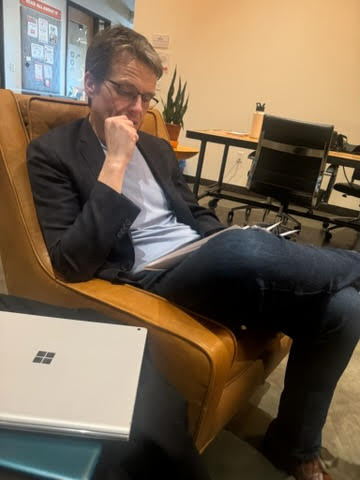
Dan Hughes is the founder of IXSOR. Twenty years in the UK, twenty-five in North Carolina. Ex-BBC. Ex-Apple. Lifelong technologist. And, most importantly: not an attorney. He writes about legal AI from the operational and infrastructure side, where the rules meet the machines. Reach: [email protected]. More by Dan →