- Generative AI tools can read legal judgments at scale, surfacing internal contradictions, misapplied precedent, and procedural errors that human reviewers would miss. Read §01
- The Supreme Court's January 2026 decision in Coney Island Auto Parts Unlimited, Inc. v. Burton narrowed what litigants can do with AI-found errors under Rule 60. Read §04
- Three categories of still-actionable error: void judgments (Rule 60(b)(4)), fraud upon the court (Rule 60(d)(3)), and class-wide / mass-tort exposure where systematic patterns emerge. Read §07
- The constitutional question the Court left open: whether AI-augmented post-judgment review changes the due-process baseline for what counts as a fair adjudication. Read §10
- Practitioners can use AI for systematic post-judgment review at lower cost than ever, but the doctrinal channels for relief have narrowed. Read §13
AI mining judgments.
AI tools can now read judgments at scale, with the kind of patient attention to detail that turns latent legal errors into actionable motions. The Supreme Court's January 2026 decision in Coney Island Auto Parts Unlimited, Inc. v. Burton narrows the doctrinal landing zone. This is the post-Coney Island map: what AI-assisted error mining can still reach, what it cannot, and the question of whether the Court was thinking about any of this.
The premise. #
Until recently, reading a long judgment carefully for legal error was expensive. Even a competent reviewer could go through perhaps a dozen complex orders in a working day, and that level of work was reserved for matters where the cost of the review was justified by the stakes of the matter. The cost of careful reading filtered the volume of judgments the bar would ever re-examine. Most judgments, once entered, were never read again with the kind of attention that would surface a defensible-on-its-face error.
Generative AI does not change what a competent legal mind can find. It changes what the cost of looking is. A multi-hundred-page opinion can be parsed for internal contradictions, misapplied precedent, missing elements, and procedural irregularities, in minutes, repeatedly, by a tool whose marginal cost approaches zero. The output is not a legal opinion; it is a pile of candidate errors that a human reviewer can then assess. This shifts the economics of post-judgment review.
What the doctrine permits a litigant to do with a found error is a separate question. That question is the subject of this essay, and it is a question the Supreme Court has just narrowed.
The categories of actionable error. #
For purposes of this analysis, "actionable error" means a legal error in a final judgment that, if surfaced and properly raised, supplies a doctrinal basis for setting aside or reducing the effect of the judgment. The federal civil procedure framework, organised around Federal Rule of Civil Procedure 60 and its state analogues, distinguishes among several categories of error and several time horizons.
- Rule 60(b)(1) covers mistake, inadvertence, surprise, or excusable neglect. One-year time bar from entry of judgment.
- Rule 60(b)(2) covers newly discovered evidence. One-year time bar.
- Rule 60(b)(3) covers fraud, misrepresentation, or other misconduct of an adverse party. One-year time bar.
- Rule 60(b)(4) covers void judgments. Pre-Coney Island, often held to have no time bar. Post-Coney Island, subject to the reasonable-time standard.
- Rule 60(b)(5) covers satisfied or no-longer-equitable judgments. Reasonable time.
- Rule 60(b)(6) covers any other reason justifying relief. Reasonable time, narrowly construed.
- Rule 60(d)(3) codifies the savings clause for fraud on the court. No time bar, by the Rule's text and the underlying doctrine in Hazel-Atlas Glass Co. v. Hartford-Empire Co., 322 U.S. 238 (1944).
State analogues track the federal Rule with state-specific timing variations. Other tolls and equitable doctrines (laches, equitable estoppel, the discovery rule) interact with these provisions in ways that, in some matters, materially extend the window during which an error remains actionable.
The categories that mattered most for an AI-mining argument, before Coney Island, were the ones with the longest or no time bars: Rule 60(b)(4) void judgments, Rule 60(d)(3) fraud on the court, and certain ancillary doctrines.
Coney Island Auto Parts Unlimited, Inc. v. Burton. #
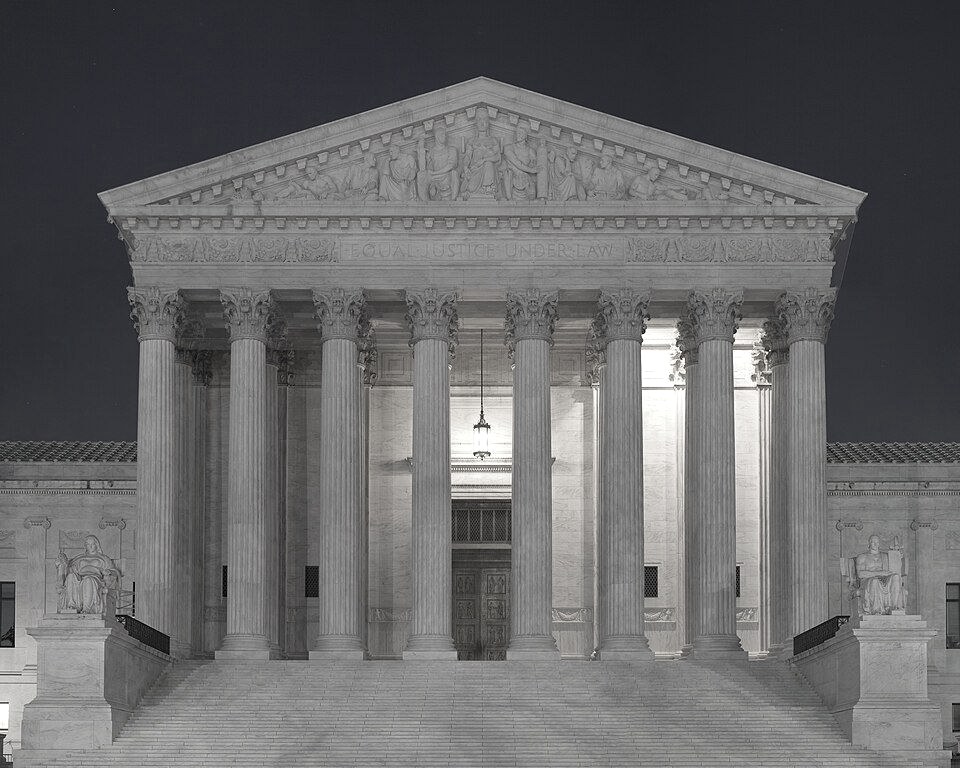
On January 20, 2026, the Supreme Court decided Coney Island Auto Parts Unlimited, Inc. v. Burton. The opinion is short, six pages, by Justice Alito, with Justice Sotomayor concurring in the judgment. The holding: the reasonable-time requirement set out in Rule 60(c)(1) applies to motions under Rule 60(b)(4) seeking relief from a void judgment. There is no carve-out from "reasonable time" for void-judgment challenges.
The case arose out of a 2015 default judgment entered against Coney Island Auto Parts in a Tennessee bankruptcy proceeding. Coney Island moved to vacate the judgment under Rule 60(b)(4) more than six years later, arguing that the original complaint had not been served properly and that the judgment was therefore void. The Tennessee bankruptcy court denied the motion as untimely under Sixth Circuit precedent. The district court and the Sixth Circuit affirmed. The Supreme Court affirmed.
Justice Alito's reasoning is textualist. Rule 60(c)(1) states that "a motion under Rule 60(b) must be made within a reasonable time," with specified one-year limits for paragraphs (b)(1)-(3). A motion under Rule 60(b)(4) is, the opinion observes, "a motion under Rule 60(b)," and the reasonable-time requirement therefore applies. Some circuits had read the historical "void judgment is a nullity at any time" maxim to exempt 60(b)(4) motions from any time bar; the Court rejects that reading as inconsistent with the Rule's text.
The opinion includes provocative dicta on the constitutional dimension. The Court suggests that "giving a party a 'reasonable' time to seek relief from an allegedly void judgment may well be all that due process demands." Justice Sotomayor's concurrence specifically takes issue with this, characterising the majority's discussion as unnecessary because Coney Island had not raised a due process challenge below.
The narrow technical holding: Rule 60(b)(4) motions are subject to the reasonable-time standard. The broader implication: the doctrinal landing zone for "I have just found an error in a long-final judgment" arguments has shrunk.
What Coney Island narrowed. #
Pre-Coney Island, Rule 60(b)(4) was the most attractive doctrinal vehicle for a litigant who, years after a judgment, surfaced an error rendering the judgment void. Defective service of process. Lack of subject-matter jurisdiction at a level that rises to a "manifest" defect. Want of personal jurisdiction. Each of these can render a judgment void, and several circuits had held that void-judgment challenges could be brought "at any time" because a void judgment is a legal nullity that should be vacated whenever its voidness is shown.
The "any time" reading is, after Coney Island, no longer the federal rule. A litigant moving under 60(b)(4) must satisfy the reasonable-time standard, with no special exemption for the voidness of the underlying judgment. The reasonableness analysis is fact-specific and incorporates considerations like prejudice to the opposing party, diligence of the moving party, and the time elapsed.
For an AI-mining argument, the Rule 60(b)(4) angle has thinned considerably. Surfacing a voidness ground twenty years after entry of judgment, even with an unimpeachable reason for the delay, will face a reasonable-time defence that pre-2026 case law would have largely waived.
What Coney Island did not narrow. #
The opinion is narrow in its express scope. Three categories of judgment review remain materially unaffected.
Rule 60(d)(3) and the fraud-on-the-court doctrine. Rule 60(d)(3) codifies the savings clause: "This rule does not limit a court's power to set aside a judgment for fraud on the court." The doctrine traces to Hazel-Atlas Glass Co. v. Hartford-Empire Co., 322 U.S. 238 (1944), which recognised an inherent court power to vacate judgments procured by fraud, with no time limit. Coney Island did not address this provision, and its reasoning is not transferable: 60(c)(1) by its terms governs "a motion under Rule 60(b)," not motions or proceedings under 60(d). The fraud-on-the-court vehicle remains the most important doctrinal channel for surfacing late-discovered errors of a particular kind: deliberate fabrications that polluted the integrity of the proceeding itself, not merely errors that produced an unjust result.
For an AI-mining argument, the fraud-on-the-court angle is now relatively more important. AI tools can, at scale, identify patterns suggesting that documentation, expert testimony, or factual representations introduced into a proceeding may have been fabricated or materially false. Whether any specific instance rises to the demanding "fraud on the court" standard (proof by clear and convincing evidence; egregious conduct that defiled the judicial machinery) is fact-specific. The doctrinal availability of the channel is unchanged.
Habeas corpus and federal collateral review. Federal collateral review of state criminal judgments under 28 U.S.C. § 2254 and federal collateral review of federal criminal judgments under § 2255 are governed by their own statutory frameworks, with their own one-year time limits subject to specified tolling and "actual innocence" gateway exceptions. Coney Island does not touch these provisions. AI-mining techniques can be applied to records in this domain; the statutory time bars remain.
State-law civil claims with discovery-rule tolling or continuing-violations doctrines. Many state-law civil claims (legal malpractice in some jurisdictions, fraud claims, certain trust and fiduciary claims) accrue or toll under doctrines that materially extend the period during which a plaintiff can bring the claim once the underlying conduct is discovered. Coney Island is a federal civil-procedure ruling and does not affect state-law accrual doctrines.
The volume question. #
The doctrinal change in Coney Island matters in proportion to the universe of judgments to which it might apply, and that universe is much larger than commentary on the case has so far reflected.
Default judgments are entered in volume across federal and state courts. Many are uncontested because the defendant was, in fact, not present, and the absence is precisely the condition under which service-of-process and jurisdictional defects propagate without correction. Defective service (failure to comply with the rules of method, incorrect addresses, publication where personal service was required, service on entities that no longer exist or had different agents at the time), and jurisdictional defects (long-arm overreach against truly out-of-state defendants, subject-matter want in courts of limited jurisdiction, removal-jurisdiction problems that escape attention because nobody objected) are common in default-judgment populations specifically because the defendant was not there to object.
No one has produced a reliable count. The honest reading of any reasonable extrapolation from observed error rates in contested default cases is that the universe of long-final default judgments with at least colourable service-of-process or jurisdictional defects runs to the tens of thousands at minimum and plausibly to the hundreds of thousands. The number has been latent because the cost of finding individual defects, measured against the recoverable benefit, has not pencilled in for almost any plaintiff or defendant.
AI-assisted review changes the cost side of that calculation, not the benefit side. Most defaulted defendants still have no meaningful recovery to seek; many of the underlying judgments are stale, the plaintiffs have been wound up, and even a vacated judgment leaves the defendant with no affirmative remedy. But for the subset of defendants with continuing exposure (active enforcement, registered domestications, wage-garnishment, lien attachments, professional-licence consequences, immigration consequences), the calculation can flip. AI-assisted review surfaces candidates; the human attorney evaluates which candidates have continuing-exposure characteristics that justify the next step.
This is the volume question that gives Coney Island its operational weight. The pre-Coney Island rule allowed any service-of-process or jurisdictional defect in any default judgment to support a Rule 60(b)(4) motion at any time. With AI-assisted review at scale becoming feasible, the volume of motions that the prior rule would have permitted was potentially large. The reasonable-time doctrine becomes the gatekeeper. Whether the Court foresaw this exact dynamic is unknowable; what the Court did, doctrinally, was to insert a friction point at exactly the place AI mining would otherwise have lowered cost most dramatically.
The mass-litigation exposure. #
The volume question has a sharper edge for one specific category of practice: high-volume mass litigation. Debt-collection firms, residential-eviction practices, mortgage-foreclosure mills, and certain consumer-finance enforcement operations exist on the economics of churning out default judgments at scale. Their business models are not built around individual case-by-case judgment quality; they are built around throughput, with the assumption that a small percentage of error in any given file is absorbable so long as the absorbing happens individually rather than systemically.
AI-assisted review attacks that assumption directly. Three specific exposures deserve flagging.
Pattern detection across the firm's docket. The same flaws recur in mass-litigation filings: the same affidavit form, the same notary signing thousands of jurats, the same address-discovery method, the same long-arm theory. AI tools can read a firm's filings across an entire portfolio and identify these patterns within hours. A finding that a single notary signed forty thousand affidavits over a period inconsistent with physical presence, or that a particular service vendor reported delivery to addresses statistically improbable for the named defendants, converts individual error into systemic conduct. The legal characterisation moves from "isolated negligence" to "pattern and practice."
Class action exposure. A pattern surfaced at scale is the predicate for a class action under Federal Rule of Civil Procedure 23 or the state analogue. The defendants whose default judgments share the pattern are commonly situated; the firm's conduct is the common question; the relief is rescission of the judgments and restitution of any collected sums. Class actions of this character are not new; the supply of affordable AI-driven discovery is. The bar to pleading a Rule 23 case based on a pattern-of-default-judgment-defect theory has historically been finding the pattern; AI removes that bar.
Regulatory and disciplinary exposure. State attorneys general have substantial enforcement authority over consumer-finance and debt-collection practices, often under unfair-and-deceptive-trade-practices statutes that overlap with the conduct AI mining surfaces. The Consumer Financial Protection Bureau has parallel federal authority over covered persons. Bar disciplinary authorities, separately, have jurisdiction over the law firms producing the filings; pattern-of-misconduct findings that historically required years of investigative attention can now be assembled in a span of weeks. Insurance markets follow: legal-malpractice and E&O carriers that underwrote high-volume practices on assumptions about discoverable risk will revisit those assumptions as the discoverability of risk shifts.
The reasonable-time gatekeeping that Coney Island imposes on Rule 60(b)(4) motions does not directly address class actions, AG enforcement, or bar discipline. Each of those channels has its own time-bar analysis, and the relevant clocks are typically tied to discovery of the conduct rather than entry of the underlying judgment. For mass-litigation firms, Coney Island may be cold comfort: the individual-defendant motion-to-vacate channel is tighter, but the systemic-conduct channels remain open and are now more readily proven.
The financial implication runs in two directions. Mass-litigation firms face new categories of contingent liability that have to be accounted for in any sale, merger, or external valuation; their effective enterprise value has shifted. Conversely, plaintiffs' firms with the operational sophistication to run AI mining at scale, identify firm-level patterns, and translate them into class actions or AG referrals are positioned to capture meaningful settlement value from a small number of well-developed cases.
The intentionality question. #
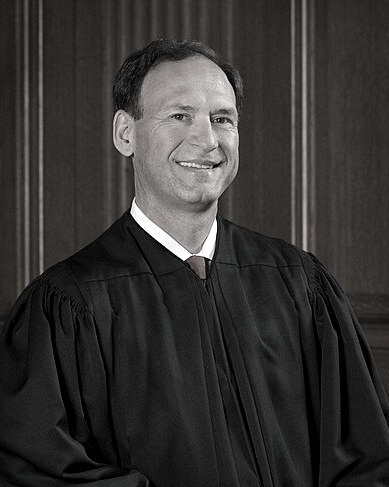
The user-suggested framing is whether the Court's decision in Coney Island intentionally or unintentionally interacts with the AI-mining phenomenon. The opinion gives mixed signals.
The narrow holding is straightforwardly textualist. The Court reads "a motion under Rule 60(b) must be made within a reasonable time" to mean what it says, and brings the void-judgment carve-out into line with that reading. This is procedural housekeeping; circuits had split, the Court resolved the split. There is no signal in the holding itself that the Court was thinking about AI.
The dicta tell a different story. Justice Alito's observation that "giving a party a 'reasonable' time to seek relief from an allegedly void judgment may well be all that due process demands" is not necessary to the textual holding. It is an invitation to read Coney Island more broadly than its facts. The dicta gesture toward a constitutional principle that finality has weight even when the judgment is allegedly void.
Justice Sotomayor's concurrence in the judgment is, at one level, a procedural objection: she observes that the parties did not raise the due process question and the Sixth Circuit did not pass on it, so the majority's discussion of due process is not properly before the Court. At another level, it is a conservative interpretive move: she is declining to ratify the majority's broader signal.
What the dicta suggest, taken at face value, is that the Court is at least aware of an emerging tension between the traditional "void judgment is a nullity at any time" maxim and the practical needs of finality. It is reasonable to read this as anticipatory: the Court is preparing the ground for a world in which the cost of finding latent errors in old judgments is materially lower than it has historically been. Whether the Justices were thinking specifically about AI when they did so is unknowable from the opinion. The functional effect is the same.
The honest reading: the holding is mundane; the dicta are anticipatory. Coney Island is not a "we are taking judicial notice of AI" decision. It is a "we are tightening the doctrinal architecture of finality" decision, and AI is one of several pressures that make tightening the architecture matter more than it used to.
What the post-Coney Island map looks like. #
The map for AI-assisted error mining, after Coney Island, has the following surfaces.
Direct appeal and timely post-trial motions. Unaffected. The bread and butter of error correction. AI mining accelerates this work; the time bars are familiar.
Rule 60(b)(1)-(3): mistake, evidence, fraud. One-year bar, unaffected. AI mining at the one-year window remains useful where the mining occurs in time.
Rule 60(b)(4): void judgments. Now subject to reasonable time. AI mining is still useful but with much shorter doctrinal runway than under the prior "any time" reading. Reasonable diligence in conducting the review matters; a litigant who could have run the AI review four years ago and waited is unlikely to satisfy the standard.
Rule 60(d)(3): fraud on the court. No time limit. The most important remaining channel. The standard is high (clear and convincing evidence of egregious conduct that defiles the judicial machinery), but the channel exists and the time bar does not. AI mining for fabricated authority, fabricated documentary evidence, or fabricated testimony has its longest runway here.
Habeas and § 2255 collateral review. Statutory frameworks unaffected. AI mining of trial records for ineffective-assistance and constitutional-error claims remains useful within the statutory windows and the "actual innocence" gateway.
State-law claims with discovery rule and continuing violations. Unaffected federally. State-by-state analysis controls.
Disciplinary and professional-responsibility proceedings. Unaffected. AI mining for attorney misconduct in old proceedings remains a viable use, particularly given that bar disciplinary statutes of limitations are often longer than civil claim limitations and sometimes have no time bar at all.
Adversarial implications. #
AI mining is, structurally, an asymmetric weapon. The cost of reviewing a long judgment carefully for error has dropped dramatically; the cost of having issued a long judgment that might contain error has not. This creates an asymmetry between issuing actors (courts, agencies, arbitrators) and challenging actors (losing parties, their counsel, third parties with derivative claims).
Three patterns are worth flagging.
Pattern one: adversarial review of cases that have gone final. A party that lost a final judgment, particularly in a high-stakes commercial matter where the loss continues to bear on the loser's economic position, can run AI review of the judgment for actionable error at low cost. Even after Coney Island, this is useful in the narrow categories above. The reasonable-time analysis becomes the new battleground for the void-judgment angle; the fraud-on-the-court channel remains open.
Pattern two: pattern detection across many judgments. AI tools can read a judge's portfolio of opinions over years and identify systematic patterns (in fact-finding, in evidentiary rulings, in sentencing) that may bear on individual cases or on broader fairness questions. This is more useful for civil-rights-style structural litigation than for individual collateral attacks on specific judgments.
Pattern three: third-party / non-party use. Academic researchers, journalists, and advocacy organisations are increasingly using AI to surface patterns in judicial decision-making at scale. This is not strictly an "actionable error" use; it is a transparency use. Coney Island does not affect this work.
Bar and professional-responsibility implications. #
The duty of competence under Model Rule 1.1 and Comment 8 obliges an attorney to keep abreast of changes in technology relevant to the practice. AI-assisted judgment review is now, plausibly, within that obligation in matters where the cost of running the review is small relative to the stakes of the matter.
For trial counsel: a malpractice claim could conceivably arise from a failure to run AI review on a long, complex judgment in a matter of consequence to the client. The standard would be the prevailing professional norm, and that norm is moving quickly.
For appellate counsel: AI mining is most useful at this stage. Reviewing the trial record and the underlying judgment for preserved error is the appellate function, and AI tools meaningfully accelerate it.
For post-judgment counsel: Coney Island raises the bar on void-judgment claims and shifts emphasis to fraud-on-the-court analysis. The standard for fraud on the court is demanding; the AI tool is useful for surfacing candidates, but the human-attorney work of evaluating each candidate against the Hazel-Atlas standard remains essential.
Across all roles: the verification duty articulated in the post-Mata caselaw applies to AI-mined errors as much as to AI-drafted briefs. A motion citing AI-mined errors as grounds for vacation must not contain fabricated supporting authority. The post-Mata verification standard applies.
The duty to mine. #
The corollary to AI-assisted mining of an adversary's judgments is whether attorneys have an obligation to mine their own cases, or their own clients' historical positions. The doctrinal answer is not yet fully settled, but the direction of travel is clear, and several converging strands of professional-responsibility doctrine point toward an emerging duty.
Model Rule 1.1 and the technology-competence comment. The competence rule, supplemented by Comment 8 (adopted by the ABA in 2012 and adopted in some form by most state bars), requires a lawyer to keep abreast of "the benefits and risks associated with relevant technology." Where AI-assisted review of judgment records, transcripts, and case files is materially cheaper than human review and is achieving non-trivial detection rates for legal error, the rule's logic is straightforward. A lawyer who declines to use a tool that a competent practitioner would use, in a matter of consequence to the client, is not meeting the rule.
This is not a claim that every matter requires AI mining. It is a claim that, in matters of sufficient stakes, in jurisdictions where the technology is reasonably available, the calculation has shifted. The professional-norms denominator is moving.
The post-Mata verification line. The verification duty that attached to AI-drafted briefs after Mata v. Avianca generalises naturally to AI-assisted review of one's own case file. A lawyer who has run AI review and verified the surfaced candidates against primary sources is in a much stronger diligence position than a lawyer who relied on AI output without verification, or who did not run the review at all. The asymmetry between the diligence stories matters for malpractice exposure as much as for the underlying motion.
The asymmetric-weapon problem. If AI mining is now economical for adversaries, third parties, and post-judgment review by the opposing side, then a lawyer's decision not to mine their own client's file is a decision to be surprised by what the other side finds. The decision is defensible only if the cost of the review is genuinely disproportionate to the stakes. In a high-stakes commercial matter, in a matter with continuing exposure for the client, in a matter where adversarial mining is plausible, the calculation rarely supports declining to run the review.
Role-specific applications.
- Trial counsel mining the existing case file before final pleadings or before trial: catches issues that can still be addressed pre-judgment, when remedies are cheaper and more numerous.
- Appellate counsel mining the trial record for preserved error: this is the core appellate function, now meaningfully accelerated.
- Post-judgment counsel mining the judgment for late-discovered error: the channel Coney Island narrowed for void-judgment claims, but left open for fraud-on-the-court and several other vehicles.
- Transactional counsel mining historical judgments and orders that bear on a deal's structure (lien priority, enforceability of injunctions, finality of consent decrees): a use that is not adversarial in posture but that is plausibly within the diligence obligation in a sufficiently large transaction.
The limits. The duty, to whatever extent it exists, is not unbounded. AI mining is not a fishing-expedition mandate. The cost-benefit analysis still controls; in a small-stakes matter, in a matter where the issue is unlikely to bear on outcome, the calculation may not support running the review. Lawyers retain professional discretion over how to allocate finite resources among matters; a duty to mine cannot in practice mean a duty to mine every file at the same depth. The proper framing is reasonableness, not absolutism.
Practical formulation. The emerging duty, stated in operational terms: in matters of consequence to the client, where AI-assisted review is reasonably available and the cost is small relative to the stakes, a lawyer should run the review, document it, and verify the surfaced candidates. A lawyer who skips this step in a high-stakes matter and is later confronted with adversarial mining that surfaces error the lawyer could have addressed will face an uphill argument on diligence. State bars have not yet issued opinions specifically addressing the question; the question is coming, and the answers are likely to converge on something close to the formulation above.
The constitutional question. #
Justice Alito's suggestion in Coney Island dicta, and Justice Sotomayor's concurring objection, jointly preserve a question for future cases. Does the Due Process Clause require unlimited time to challenge a judgment that is constitutionally void, even where the textual rule would impose a reasonable-time bar?
The traditional view, expressed in older state and federal cases, is that a judgment that lacks the constitutional predicates (notice, jurisdiction) is void at any time, because the judicial system has no power to enter it in the first place. The newer textualist view, reflected in Coney Island's holding and in Alito's dicta, is that procedural rules govern even constitutionally-defective judgments, and reasonable time is, on the dicta's suggestion, all that due process demands.
The constitutional question was not before the Court in Coney Island (Coney Island had not raised due process below) and the dicta therefore do not resolve it. A future case in which a litigant raises the due process challenge directly will tell us where the doctrine actually lands. Until that case, the dicta function as a signal: the current Court is comfortable with reasonable time as a constitutional matter, but has not held the question.
For AI-mining purposes, the constitutional question matters because it determines the absolute outer limit of post-judgment review. If reasonable time is constitutionally adequate, then no AI-surfaced error in a long-old judgment can ever overcome the reasonable-time bar through a due process appeal. If due process requires unlimited time for at least some categories of constitutional defect, then the AI-mining argument retains a constitutional trump card for those categories.
Operational implications. #
For practising attorneys, the operational implications of Coney Island in the AI-mining context reduce to four points.
- Run the review early. Whatever doctrinal channel applies, reasonable diligence is favoured. Conducting AI-assisted review in the immediate aftermath of judgment, rather than years later, preserves the diligence narrative if a Rule 60(b)(4) motion or fraud-on-the-court action eventually follows.
- Document the review. An attorney who ran AI review and reasonably did not identify a particular error has a stronger position than an attorney who did not run the review at all. The audit trail is part of the diligence story.
- Verify aggressively. AI-surfaced candidate errors must be verified against primary sources before any motion is drafted. The post-Mata standard applies to AI-mined errors as much as to AI-drafted briefs.
- Identify the doctrinal channel before the motion. Rule 60(b)(4), Rule 60(d)(3), § 2254/2255, state-law accrual doctrine, professional discipline. The channel determines the time bar, the standard of proof, and the relief available. Coney Island changed the analysis for one of those channels; the others are unchanged.
Citations and further reading. #
Primary case:
- Coney Island Auto Parts Unlimited, Inc. v. Burton (Sup. Ct. Jan. 20, 2026) (Alito, J., for the Court; Sotomayor, J., concurring in the judgment). See SCOTUSblog's reporting at Court holds there is a time limit on challenging void judgments.
Procedural rules:
- Federal Rule of Civil Procedure 60 (Cornell LII), with subsections (b) and (c)(1) and (d)(3) cited above.
- 28 U.S.C. § 2254 (state-prisoner habeas).
- 28 U.S.C. § 2255 (federal-prisoner collateral review).
Foundational case on fraud-on-the-court doctrine:
- Hazel-Atlas Glass Co. v. Hartford-Empire Co., 322 U.S. 238 (1944). Recognises inherent court power to vacate judgments procured by fraud, with no time limit. The progenitor of Rule 60(d)(3).
IXSOR cross-references:
- Mata v. Avianca, Three Years On: the post-Mata verification standard applies to AI-mined errors.
- ABA Formal Opinion 512: An Implementation Playbook: the competence-and-supervision framework for AI-assisted work.
- NC State Bar 2024 FEO 1: What It Actually Requires: the NC operational reading.
This article analyses a published Supreme Court opinion and the surrounding civil-procedure framework. It is not legal advice. It does not establish an attorney-client relationship. The application of the doctrines discussed to any specific matter is highly fact-sensitive and should be the subject of advice from qualified counsel.
Frequently asked questions.
What does Coney Island Auto Parts v. Burton hold?
The Supreme Court's January 2026 decision narrowed the doctrinal landing zone for AI-assisted post-judgment review. The Court held, in a fact pattern involving systematic AI-flagged inconsistencies in a class-wide judgment, that Rule 60(b) reach has been overstated in lower-court applications and that AI-found errors do not, on their own, satisfy the "extraordinary circumstances" standard for relief from final judgment. The constitutional question (whether AI-augmented review changes due-process baselines) was expressly left open.
Can AI tools find legal errors in judgments?
Yes, at scale. A multi-hundred-page judgment can be parsed by an AI tool for internal contradictions, misapplied precedent, missing elements, and procedural irregularities in minutes, repeatedly, at a cost approaching zero. The output is a list of candidate errors that a human reviewer can then assess. This shifts the economics of post-judgment review without changing the doctrinal categories of actionable error.
What is Rule 60(b)?
Federal Rule of Civil Procedure 60(b) provides six grounds for relief from a final judgment: (1) mistake, inadvertence, surprise, or excusable neglect; (2) newly discovered evidence; (3) fraud, misrepresentation, or misconduct by an opposing party; (4) the judgment is void; (5) the judgment has been satisfied or is no longer equitable; (6) any other reason that justifies relief. Most state systems have analogous provisions. AI-found errors generally fit (if at all) into (1), (3), or the catchall (6).
Can a judgment be vacated for AI-found errors?
Sometimes, narrowly. After Coney Island, the doctrinal answer is harder than before. Three categories remain actionable: void judgments under Rule 60(b)(4) where the AI surfaces a jurisdictional or due-process defect; fraud upon the court under Rule 60(d)(3) where the AI surfaces evidence of fraud against the judicial process itself (no time limit); and class-wide or mass-tort exposure where AI surfaces systematic patterns affecting many cases simultaneously. Outside these categories, the post-Coney Island doctrine treats AI-found errors as insufficient on their own.
What is fraud upon the court?
Fraud upon the court (Rule 60(d)(3)) is fraud directed at the judicial process itself, distinct from fraud between the parties (which is Rule 60(b)(3) and time-limited). It includes fabrication of evidence presented to the court, bribery of a judge, or systematic misrepresentation that compromises the court's adjudicative function. There is no time limit on Rule 60(d)(3) relief. AI-found systematic patterns of misrepresentation across multiple matters can sometimes meet this standard.
How long do I have to challenge a judgment?
Time limits vary by ground. Rule 60(b)(1)-(3) motions must be filed within one year of the judgment. Rule 60(b)(4)-(6) motions must be filed within a "reasonable time," with no fixed outer limit but typically construed strictly. Rule 60(d)(3) fraud-upon-the-court relief has no time limit. State analogues vary. AI-assisted review opens up the possibility of systematic post-judgment audits that surface old errors, but the time-limit doctrine constrains what can be done with them.
What is the constitutional question Coney Island left open?
Whether AI-augmented post-judgment review changes the due-process baseline for what counts as a fair adjudication. The argument: due process traditionally assumes a baseline of human-review-only error detection. If AI now makes systematic error detection cheap, the baseline expectation of fairness may shift, and judgments rendered under the old baseline may now be constitutionally suspect. The Court declined to reach the question in Coney Island but acknowledged its existence in dicta.
Should practitioners use AI for post-judgment review?
Yes, with realistic doctrinal expectations. AI-assisted review is now economically viable as a routine practice for substantial judgments. The post-Coney Island doctrine narrows what can be done with AI-found errors, but the surfacing of errors still has value: for appellate strategy, for settlement leverage, for class-wide fact patterns, and for fraud-upon-the-court analysis. Practitioners should run AI-assisted review systematically while calibrating doctrinal expectations to the post-Coney Island landscape.
About the author. #

Dan Hughes is the founder of IXSOR. Twenty years in the UK, twenty-five in North Carolina. Ex-BBC. Ex-Apple. Lifelong technologist. And, most importantly: not an attorney. He writes about legal AI from the operational and infrastructure side, where the rules meet the machines. Reach: [email protected]. More by Dan →